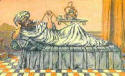
Descriptions
of the shampooing ritual suggested all manner of torture to be endured
by the fearful novice. Hear the reassuring words of the physician at
Newcastle’s Pilgrim Street baths.
The
British subject, on being for the first time submitted to this
process, is apt to consider that liberties are being taken with his
sacred person, especially when the conclusion of the performance is
signalised as usual by a resounding smack. But on the whole the
sensation produced is decidedly pleasant, and there is no doubt that
the effect of it is salutary.
Very Public
School!
At the
Brighton Hammam, after the manipulation is over,
the
attendant dashes the foreign matter from the body by tepid water
from a bowl, much as a servant-girl would wash the windows of a
house. Camel hair gloves are then brought into use, and the bather
is well rubbed with them; the fruit of their use being also washed
off with tepid water. A lather made from Castile soap is next
applied by something like a gigantic shaving brush made from the
fibres of the palm tree.
At the
London Hammam, the ritual is tripartite:
As
soon as the skin of the bather exhibits a flow of gentle
perspiration a tellak, or bathman, commences the manipulation which
characterises the native tellak. We are conscious immediately that
Eastern hands are upon us.
First a
gentle massage to loosen the muscles, and then
with
a camel's-hair glove on his hand [the bathman] sweeps over every
inch of the body from the neck to the heels, starting the skin and
planing it off in successive rolls, his dextrous hand missing no
portion of the body.
And when
all was considered to be clean
Every
part of your body is then cracked with surprising skill—an
alarming operation to a novice, but a perfectly safe and necessary
one when performed by experienced tellaks.
Like all
initiation ceremonies, the description of the shampooing ritual was
then embellished by the initiate to be related in even more terrifying
terms to the next novice he meets.
6.
The hand-clapping ritual