Warm water baths provided under the
Baths and Wash-houses Acts
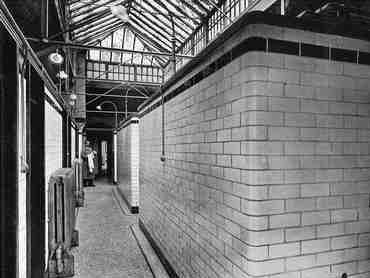
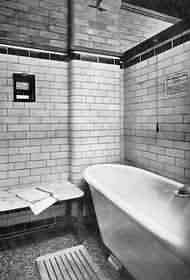
< Report on public baths and wash-houses in the United Kingdom / Agnes Campbell. — Edinburgh : Carnegie United Kingdom Trust, 1918
Slipper baths provided at the Lower Dartmouth Street Cottage Baths, in Birmingham, around 1910.
Cottage baths were built in the poorer areas of the big cities where the need was greatest, but the land available for building was limited. They were often converted from private houses. There were separate entrances for men and women and, as usual, the men's baths were more numerous than the women's. Between the two world wars,
The routine at the baths hardly varied. One paid and went through a turnstile to join the queue which on busy days might spill out on to the street. The front part of the queue sat on wooden benches, moving up each time the Attendant called 'Next!'. Children might suffer the injustice of losing their place in the queue when asked to give up a seat for an adult who was still standing, farther down the line. 1
The twopenny second class baths bought only ten minutes bathing time.
This page enlarges an image or adds to the information found below:
Urquhart and the London Hammam. Part 2: a couple of books and a couple of Acts
Early problems and controversies. Part 6: Class

Victorian Turkish Baths: their origin, development, and gradual decline



Comments and queries are most welcome and can be sent to:
malcolm@victorianturkishbath.org
The right of Malcolm Shifrin to be identified as the author of this work
has been asserted by him
in accordance with the Copyright, Designs and Patents Act 1988
© Malcolm Shifrin, 1991-2023