This is a single frame, printer-friendly page taken from Malcolm Shifrin's website
Victorian Turkish Baths: their origin, development, and gradual decline
Visit the original page to see it in its context and with any included images or notes

This is a slightly abridged version of a paper given at the
Heritage and the Victorians Conference
Gladstone Centre for Victorian Studies in Wales and the North West
on Thursday 26 June 2008
1. Heritaging
Why was heritage so important to the Victorians? And, more specifically, why did Richard Barter, the Victorian Irish originator of what was, in effect, a new type of hot air bath, feel, in common with later proprietors of such baths, that it was so important to heritage it by emphasizing its relationship with other, older baths?
Further, given that there was already a traditional use of hot air baths in Ireland, why was this indigenous heritage rejected in favour of building on the culture of another nation?
Why determine that it should be seen as a copy of the so-called ‘Turkish’ bath of the Ottoman Empire—a bath which was, in practice, quite different?
Or, perhaps even more strangely, why did they feel a need to see their new bath as a rebirth of the ancient Roman bath?
After all, Ireland was one of the few places in Europe, or around the Mediterranean, where the Romans never actually built a bath, and where, consequently, there were no Roman ruins to copy.
There is a certain irony here. When the Germans built their Victorian Turkish baths, they called them—and often still call them—Roman-Irish baths—a far more accurate name than any used in Ireland itself.
In Paradoxes of patrimonialization, the Belgian sociologist Rudi Laermans suggests that the whole modern heritage machine is a dynamic network of regulations, subsidies, and divergent interests that selects specific artefacts from the past, and transforms them into objects which it is politically and administratively feasible to protect and conserve.
It is precisely this temporal conservation that is the clearest indication of the active transformation of an artefact from the past, whether material or not, into a piece of heritage.
He suggests that this is probably the basic operation of every form of ‘patrimonialization’ or ‘heritaging’, which two words he treats as synonyms. I prefer, here, to use the gender-neutral ‘heritaging’.
But Laermans emphasizes an important point when he writes:
The advantage of these verb forms is that they immediately dispel the illusion that the heritage character of an artefact from the past is simply something observed. This is manifestly not the case. Something is designed as declared heritage, and that is undeniably a performative act of language and not a neutral observation.
This well sums up a continuing transformation which took off in the latter half of the twentieth century. A magnificent landscape, for example, or a beautiful building or even a bedroom can be heritaged, thereby becoming an asset for sale to customers of the heritage tourism business.
But perhaps the process of heritaging is older than this modern discourse suggests; for it seems to have been alive and well in the nineteenth century, albeit in a slightly different form.
Since ‘heritaging’ does not yet appear in the Oxford English Dictionary I feel no compunction in extending its meaning to encompass its earlier exemplification.
So while the modern usage of the word suggests taking an artefact from the past and deciding that it is part of a nation’s heritage, I argue that there were examples of heritaging in the nineteenth century where a nation’s heritage was selected and attached to something new, with the aim of blurring its novelty, giving it greater credibility by associating it with a heritage, and making it a more saleable asset.
This page revised and reformatted 02 January 2023
The original page includes one or more
enlargeable thumbnail images.
Any enlarged images, listed and linked below, can also be printed.
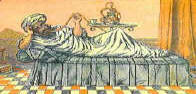
Advertisement for Cork Turkish Baths
Cağaloğlu, Istanbul, Turkey
Baden-Baden, Germany, hot room shortly after opening
Masada, Israel, ruins of Roman bath
Piazza Armerina, Sicily, ruins of Roman bath
Sweathouse in Tullynahaia, Co.Leitrim


Victorian Turkish Baths: their origin, development, and gradual decline



Comments and queries are most welcome and can be sent to:
malcolm@victorianturkishbath.org
The right of Malcolm Shifrin to be identified as the author of this work
has been asserted by him
in accordance with the Copyright, Designs and Patents Act 1988
© Malcolm Shifrin, 1991-2023