This is a single frame, printer-friendly page taken from Malcolm Shifrin's website
Victorian Turkish Baths: their origin, development, and gradual decline
Visit the original page to see it in its context and with any included images or notes

7. The Victorian Turkish bath and women's health
In a classic example of the medical profession attempting social control, women of all ages were linked by the admonition that ‘all who have any kind of constitutional weakness, and all persons over thirty-five years of age,’ should ‘ask medical advice before taking their first Turkish bath.’
In truth, not all doctors liked the Turkish bath. Some saw themselves being deprived of work. Others felt the bath should only be given under medical supervision, as did this physician, expressing her strongly held views in a letter to the Turkish bath advocate Richard Metcalfe.
Dr Elizabeth Blackwell begs to state, respecting the propriety of introducing the Turkish bath into the proposed baths for the working classes [in Paddington], that she has known so much mischief arising from the ignorant or careless use of that powerful agent, the Turkish bath, that she does not consider it a safe appliance for ordinary public baths.
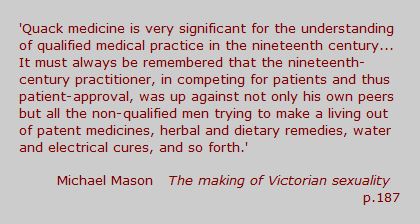
Proprietors were often seen as quacks by the medical profession—indeed, some of them were—but it was ‘good business’ not to offend the local doctor and risk the loss of his patients.
The Turkish bath proprietor most certainly knew the bath itself was not harmful to women. Indeed, those women who worked long hours as masseuses in the hot baths, not only came to no harm, but frequently lived longer lives than those persuaded to avoid exercise.
While, as we have seen, some Turkish bath companies restricted the times when their baths were available to women on the basis that they were underused, others companies were not averse to making arrangements for special groups of bathers if there was the possibility of making a profit.
In 1882, when the Oriental and General Bath Company of Leeds refurbished its sixteen year old baths in Cookridge Street, it was decided to build a separate Turkish bath suite for women.
A special feature of this establishment is the Jewesses’ baths, comprising first and second class, built at the request of the Jewish community, from plans supplied by the Chief Rabbi, and used exclusively by Hebrews...
The mikveh (a ritual bath which requires running water) is used by Jews on particular occasions, but especially by women after childbirth or menstruation. The Oriental was one of a number of companies (and, later, local authorities) which made such provision as part of their Ladies Turkish baths suite, the most recent probably being the Pier Approach Baths at Bournemouth, opened in 1937.
As early as 1859, Potter somewhat coyly advertised the arrangements made at the first Turkish bath ‘for the special accommodation of ladies,’ few of whom were yet, it seemed,
conscious of its power to mitigate the natural ills and inconveniences to which nature and an artificial mode of life have subjected them. This portion of the subject can, however, only be slightly touched upon, but a word to the wise will be sufficient.
The Turkish bath was felt to have had a beneficial effect in connection with irregular periods. Dr Charles Lockhart Robertson believed that even if its only remedial power was to restore ‘suppressed menstruation’ it would still be valuable.
‘I have within the last two months,’ he wrote to David Urquhart ‘discharged two young girls cured, who for many months suffered from maniacal symptoms, connected with irregular menstrual action . . .’
And when Edgar Sheppard introduced the Turkish bath at Colney Hatch Lunatic Asylum, it was welcomed by his (un-named) colleague in the female department who attributed the recovery of a patient from ‘puerperal mania’ to her third bath.
The commissioners in lunacy ‘witnessed its application’ to ensure no cruelty was involved, reporting that the patients enjoyed their Turkish baths. Hardly surprising when, using traditional bathing facilities, ‘from three to six women are bathed in the same water’.
Although the Turkish bath was often recommended as a palliative, it was undoubtedly less harmful than most patent medicines. Some made claims that it ‘removes the cause of barrenness’; others, more sensibly, advised women that it would not harm them while pregnant or nursing.
Charles Bartholomew’s guide to his own Turkish baths54 boasted numerous testimonials claiming relief from pain in a wide range of illnesses, including many for which there was then no known cure. About a third of these were from women.
Unfortunately, there are few personal accounts of the use of the Turkish bath other than those written by men. Who were the women bathers? How did they travel to the baths? Did they go singly or with friends?
How did they finance their visits? Were women able to use male approval of the Turkish bath to facilitate the management of such visits for their own enjoyment?
Was there a social change between the 1850s and 1880s which made it acceptable to ‘pamper’ oneself without the need to justify the bath as a medical necessity?
There is plenty of scope for other researchers!
This page reformatted and slightly revised 09 February 2023

Doug Corrance for permission to reproduce his painting of the Drumsheugh women reading
in the cooling-room;
Dr Mary Ann Elston for helpful comments on an earlier version of this paper;
Dr Lesley A Hall for help relating to the possible need to reassure women that the bath was
non-threatening and did not intrude into their privacy.
The original page includes one or more
enlargeable thumbnail images.
Any enlarged images, listed and linked below, can also be printed.
Plan: Turkish bath at Colney Hatch asylum
Maud and her friends visit the Turkish bath: 2
Ladies' Day in the cooling room at Drumsheugh Baths

Victorian Turkish Baths: their origin, development, and gradual decline



Comments and queries are most welcome and can be sent to:
malcolm@victorianturkishbath.org
The right of Malcolm Shifrin to be identified as the author of this work
has been asserted by him
in accordance with the Copyright, Designs and Patents Act 1988
© Malcolm Shifrin, 1991-2023