This is a single frame, printer-friendly page taken from Malcolm Shifrin's website
Victorian Turkish Baths: their origin, development, and gradual decline
Visit the original page to see it in its context and with any included images or notes


Manchester and Salford Baths and Laundries Limited
Company baths: MANCHESTER: Leaf Street, Hulme
MANCHESTER: London Road, Mayfield
As handwriting is often unclear,
all name transcriptions below are indicative only.
When accuracy is important, the original documents should be consulted.
PRO (Public Record Office) documents are at The National Archives, Kew.
The company was set up in 1855 and built its first swimming baths at Greengate Street in Salford almost immediately. Part of the building was demolished in the 20th century to make way for Trinity Way, but part remains standing.
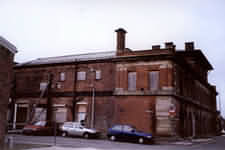
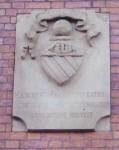
A plaque on the wall reads:
MANCHESTER & SALFORD BATHS &
LAUNDRIES COMPANY INCORPORATED
ANNO DOMINI MDCCCLV
It seems reasonably certain that similar plaques were set into walls in all their baths. Those in Leaf Street and London Road (Mayfield) were both built in 1857 and had Turkish baths added in 1860 and 1861 respectively.
The company's first Turkish bath was an experiment which the directors considered a success and a similar one was, therefore, set up in Mayfield. The annual report for 1861 noted:
It seems as though there was a growing desire on the part of the public for Baths of this description, and your Directors hope that the Turkish Baths belonging to this Company will be found to possess every accommodation and comfort.
But their success did not last long and the following year was a difficult one. The report for 1862 said that the directors,
had to contend with two very formidable difficulties during the past year, viz, an unusually cold season, and the unparalleled distress of the working classes, who form a very important portion of their customers.
A new, and apparently quite unexpected, 'extraordinary rise in the price of coal' added more than £150 to the company's fuel costs in 1866, reducing its already very small profit margin even further.
The following year was even worse and the annual report for 1867 shows just how difficult it was for a limited company to make even the smallest profit when so many factors, most of them quite out of the company's control, militated against them.
This Company having been in existence now for twelve years, it may be presumed that the knowledge acquired in the period is reliable. The experience of the past shows that the number of bathers ebbs and flows according to the temperature of the weather, that warm summers are not very frequent, and that public baths having only five or six months in the year in which their receipts are in excess of the expenditure, will always experience considerable difficulty in yielding more than a small amount of profit.
The Bathing season of last year was not a favourable one, and the amount of business done was somewhat less than in 1866. The chief falling off is in the number of washers, and has most probably been caused partly by the depressed state of certain branches of the manufacturing industry, partly by the removal of thousands of houses in Ancoats by the railway company, and partly by the increased charges which at the beginning of the year the Directors were reluctantly induced to make in consequence of the great advance in the price of coal.
Yet even when the weather improved, as it did the following year, the company's profits continued their downward trend. Employment for their main customers was still hard to get and the company also blamed 'the high price of provisions' and 'the opening of other establishments'.
While it is important to bear in mind that the company's main losses were made by their swimming pools, it is clear, if we look at the takings of the Turkish baths in each establishment, that little succour was forthcoming from that source.
All in all, it is quite difficult to see how the company survived for as long as it did.
TNA: PRO: BT31 423/2398 All unfootnoted information is taken from this file.
1856 [Memorandum of Association]
1857 Directors: Barnes, Robert Brooks, Sam Dunn, James Garnett, Jeremiah Heron, Joshua Heywood, Oliver Langworthy, E R (Deputy Chairman) Mackie, Vic Neild, William (Chairman) Nicholas, Benjamin Potter, Sir John Turner, J A Secretary: Hugh Fleming
1858 Secretary: William Allison
1864 Chairman: George Robinson
1866 Chairman: Abel Heywood
1875 The company and its properties were purchased by Manchester Corporation, probably some time during this year, or the one following.
This page last updated 20 June 2020

Michael Young for information and his photos
The original page includes one or more footnotes,
and thumbnail images which can be enlarged.
Any enlarged image, listed and linked below, can also be printed.
Plaque


Victorian Turkish Baths: their origin, development, and gradual decline



Comments and queries are most welcome and can be sent to:
malcolm@victorianturkishbath.org
The right of Malcolm Shifrin to be identified as the author of this work
has been asserted by him
in accordance with the Copyright, Designs and Patents Act 1988
© Malcolm Shifrin, 1991-2023