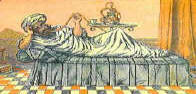
The slipper bath
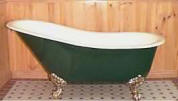
The slipper bath is similar to most baths found in homes today. But early ones often had shaped sides, as shown here, and so suggested, to some, the idea of a slipper.
In the nineteenth century, and well on into the twentieth, few homes had hot and cold running water. Baths were taken either in a tin bath in front of the fire, or else down at the local public baths. Many local authority Turkish baths also had laundries and slipper baths. But in the poorer areas, where the need was greatest, the availability of building land was frequently limited so private houses were converted into what were known as Cottage baths.
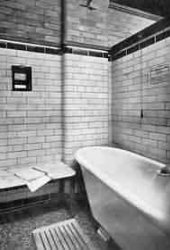
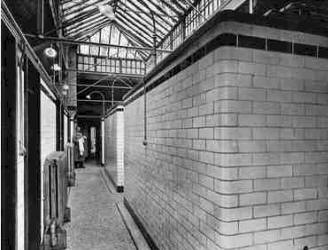
Photos: Report on public baths and wash-houses in the United Kingdom / Agnes Campbell. — Edinburgh : Carnegie United Kingdom Trust, 1918
There were separate entrances for men and women and, as usual in most places, the men's baths were more numerous than the women's. In her Turrets, towels and taps (Birmingham City Museum and Art Gallery, 1984), Rachel Wilkins quotes one of the bathers at the slipper baths at Lower Dartmouth Street Cottage Baths (illustrated above) to show that, even as late as the inter-war years, the routine hardly varied:
One paid and went through a turnstile to join the queue which on busy days might spill out on to the street. The front part of the queue sat on wooden benches, moving up each time the Attendant called 'Next!'. Children might suffer the injustice of losing their place in the queue when asked to give up a seat for an adult who was still standing, farther down the line.
The twopenny second class baths bought only ten minutes bathing time. At the side of the bath can be seen a handle on a chain which could be pulled if help was required in an emergency.